
The shocking truth of the climate-threatening animal husbandry and aquaculture industry is exposed in the documentary “THEY – They: The Rise of Aquatic Animal Farming” produced in partnership with Animals View and Animal Save India
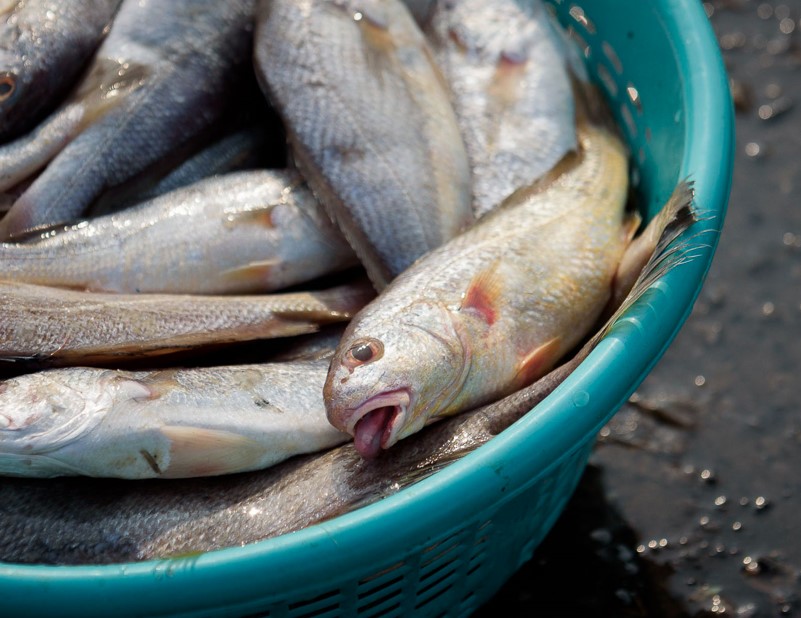
Animals’ View, a Spanish animal rights association, with the collaboration of Animal Save India have conducted an investigation in India and Spain into the boom of aquaculture and fishing, industries that affect an annual average of 28 trillion animals consumed globally. It is estimated that around 1.5 trillion are fish, with the remainder being crustaceans, mostly shrimp, although these estimated figures could be much higher. In an industry accustomed to speaking in terms of “schools of fish” or “tons of crustaceans,” Animals’ View has documented the lives of some of these animals as they are taken from the ocean or fish farms to markets and fish auctions, aiming to increase empathy with these beings.
In their new documentary, “THEY – वे: The Rise of Aquatic Animal Farming,” the association denounces that the exploitation of aquatic animals is reaching unimaginable numbers. Recent research by another NGO, Rethink Priorities, estimates that the number of aquatic animals used and exploited for consumption will grow by approximately 45% by 2033.
The Exploitation of Aquatic Animals: Fish Farms, Catches, and Trawling
The documentary exposes the brutality of aquaculture farms, comparing them to terrestrial farms, but due to the sheer number of animals trapped in this system, the scale of suffering is far greater. “In each of these aquaculture farms, thousands or tens of thousands of animals can live overcrowded, usually in murky, poor-quality water, which is a source of disease, stress, and premature death,” Animals’ View denounces. Fish, shrimp, crabs, crayfish, eels, lobsters, octopuses… no one is safe from one of the fastest-growing and most opaque industries on the planet.
During collection, animals are subjected to repeated blows as well as crushing. The killing methods are so terrible that, according to the association, we would never accept them for other animals: from slow suffocation to being frozen alive. Researcher and Professor Emeritus of Ecology and Evolutionary Biology at the University of Toronto, Mart Gross, who collaborated on the documentary by reviewing scientific literature and providing key data, explains that “freezing a fish alive may sound simple, but physiologically it’s anything but gentle. Cold receptors fire, metabolism slows painfully, and hypothermia gradually overtakes the body. The animal likely experiences prolonged distress before consciousness fades.”
Additionally, Gross explains a common industry practice: “When marine fish are suddenly placed in freshwater, they face a violent osmotic shock. Their cells swell, gills are damaged, and normal respiration collapses. From what we understand, this likely causes panic, respiratory distress, and a prolonged, painful death.”
Jonathan Birch, a British philosopher and professor at the London School of Economics (LSE), who has become one of the most influential voices in the animal sentience debate, also contributed to the documentary to explain this phenomenon: “In 2005, a scientific panel advised the EU that killing crustaceans this way is “likely to cause pain and distress”. Twenty years later this slow, painful slaughter method is still used.”
In trawling, Gross explains that when fish are dragged to the surface at such speed, “Their swim bladder may rupture, internal organs shift, and barotrauma sets in. Disorientation, pain, and injury follow. The scientific evidence is clear: trawling inflicts profound physiological trauma and suffering on countless fish”. Some of these animals, the report states (which includes at least 15 distinct scientific citations), can have their internal organs burst due to the abrupt change in pressure as they are brought to the surface. Those that arrive alive will die crushed under the weight of hundreds or thousands of other animals caught in the nets, suffocated outside the water, or frozen alive on boats.
Other practices documented by the association are unsupervised because there is no control or empathy for these animals: death by beating or mutilation, among others.
Scientific Evidence: Aquatic Animals Also Feel Pain, Fear, and Distress
Fish possess nerve structures to detect and transmit pain (nociceptors) and process sensory information similarly to mammals or birds. Other aquatic animals, such as octopuses and other cephalopods, also have nociceptors and show behaviors that are clear indicators of sentience. They also exhibit cognitive abilities that can only exist if we admit they have conscious experiences: complex problem-solving, tool use, or observational learning.
In shrimp farms, to stimulate female reproductive capacity, a method involving eye-stalk ablation is practiced. This stalk contains glands that regulate ovarian maturation and egg production. After this mutilation, the animals move erratically and show behaviors associated with pain, such as tail flicking, rubbing the affected area, or shrinking.
Crustaceans like crabs and lobsters have their claws tied or tendons cut to prevent fighting. These methods cause them immense pain and stress, as they cannot defend themselves. Many of these animals are boiled alive. During this process, they writhe for minutes before losing consciousness.
Birch explains about these methods: “When you see people calmly cutting the eyes off shrimp, you realize we’ve reached the heart of darkness. Industrial animal agriculture has gone too far, too fast, normalising a level of violence that is shocking and morally unforgivable. And it’s not just with shrimp; the same happens with pigs, chickens, and fish.”
Spain, Epicenter of Shrimp Imports in Europe
In 2023, Spain ranked as the fourth-largest global importer of shrimp and prawns, with a value of approximately 1.2 billion dollars, importing 2.5 tons from India alone, the world’s second-largest exporter of these animals. This unrestrained consumption drives an industry where suffering is the norm.
Animals’ View and Animal Save India ask citizens to consider the scientific evidence demonstrating that these animals feel and suffer, despite being so different from us. They also encourage people to take steps towards a paradigm shift where other animals are also taken into consideration and to learn about accessible, quality plant-based food alternatives.
About Animals’ View: Animals’ View, founded in 2023 is an association that, through images and information, seeks to generate a change in collective consciousness regarding our relationship with other animals and the discrimination they suffer due to speciesism. Their mission is to transmit anti-speciesist values through investigations in collaboration with organizations and activist groups in Europe and the Global South.
About Animal Save India: Animal Save India or Animal, Climate and Health Save India is a registered Non-Profit Organisation under Section 8 of the Companies Act as Animal Climate and Health Save Foundation.
Animal, Climate and Health Save India are creating a social justice movement in India that encourages healthy planetary choices to reverse climate change, to reforest the Earth and seeks to abolish all forms of animal exploitation and promote veganism.